
A saddle is one of the most important pieces of equipment you will purchase for riding. It creates the connection between horse and rider, influences your position, and can affect the horse’s comfort and freedom of movement. Appearance matters, but correct fit, suitable construction, and reliable materials should always come first.
Begin by considering the type of riding you intend to do. Saddles designed for general riding, jumping, dressage, endurance, and polo have different seat shapes, flap positions, and weight distributions. Choosing a saddle designed for your discipline gives you a more suitable starting point, but it does not guarantee the saddle will fit your horse.
A saddle must suit the horse’s back shape, wither profile, and current muscle development. It should also provide enough room and balance for the rider without placing uneven pressure on the horse. Because horses can change shape as their fitness, weight, age, and workload change, saddle fit should not be treated as a one-time decision.
The British Horse Society’s saddle-fit guidance recommends regular assessments by a qualified saddle fitter and suggests having the fit checked approximately every six months. A new check may be needed sooner if the horse gains or loses weight, returns to work after a break, changes workload, or begins showing unexplained discomfort.
Possible warning signs include a saddle that moves excessively, slips to one side, bridges over part of the back, or consistently leaves an uneven sweat pattern. Changes in the horse’s behavior when being saddled or ridden should also be investigated. These signs do not identify a specific problem by themselves, so consult a qualified fitter and, where necessary, an appropriate veterinary professional.
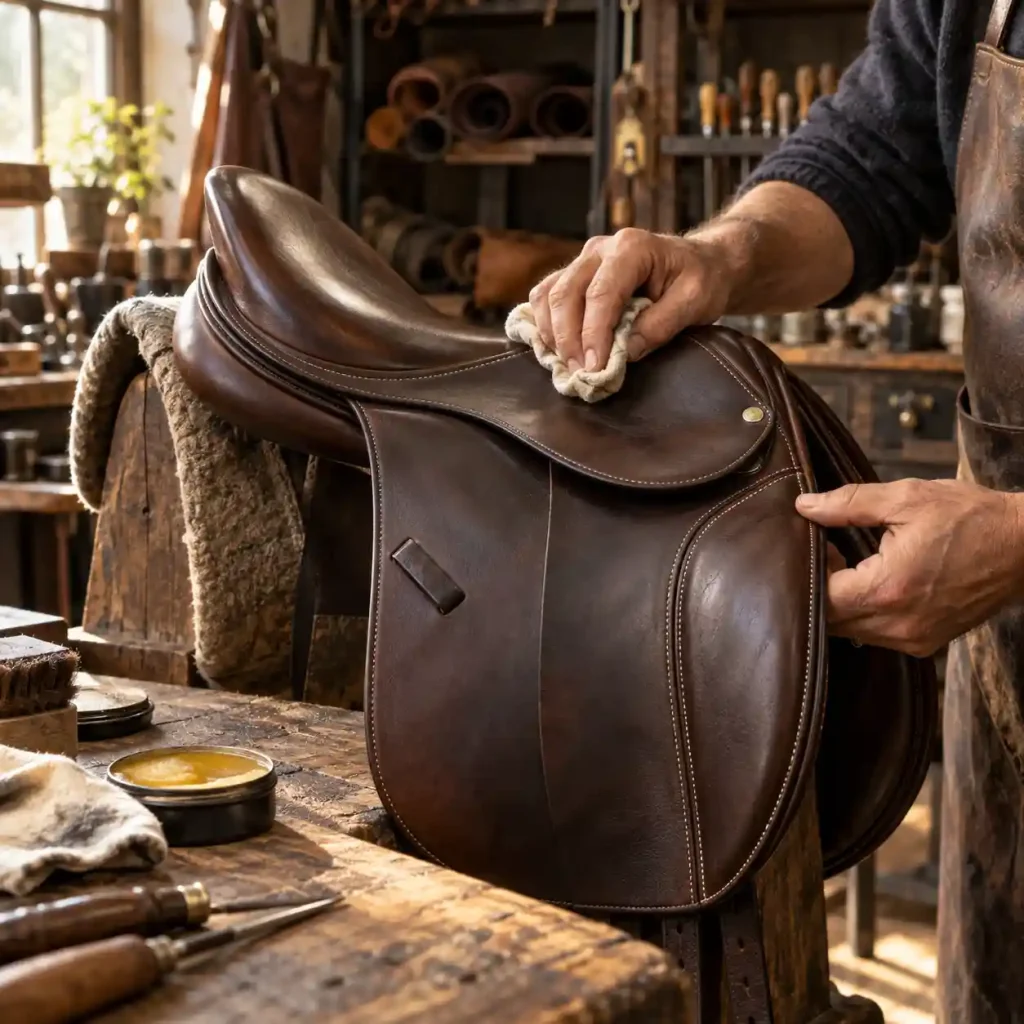
Regular care will help protect your saddle after purchase. Wipe away dust, hair, and sweat after riding using a soft cloth or suitable brush. Use a leather cleaner and conditioner recommended for the saddle’s particular leather, following the manufacturer’s instructions. Avoid saturating the leather or applying excessive oil, as this may soften important structural areas or damage certain finishes.
Inspect the billets, stitching, panels, girth attachments, and other high-stress areas regularly. Any cracking, loose stitching, unusual movement, or structural damage should be assessed by a professional saddler before the saddle is used again.
Store the saddle on a properly shaped rack in a dry, ventilated area. Keep it away from direct sunlight, damp walls, and strong heat sources. With professional fitting, sensible storage, and consistent care, a quality saddle can provide dependable service while supporting the comfort of both horse and rider.
Hi, this is a comment.
To get started with moderating, editing, and deleting comments, please visit the Comments screen in the dashboard.
Commenter avatars come from Gravatar.