
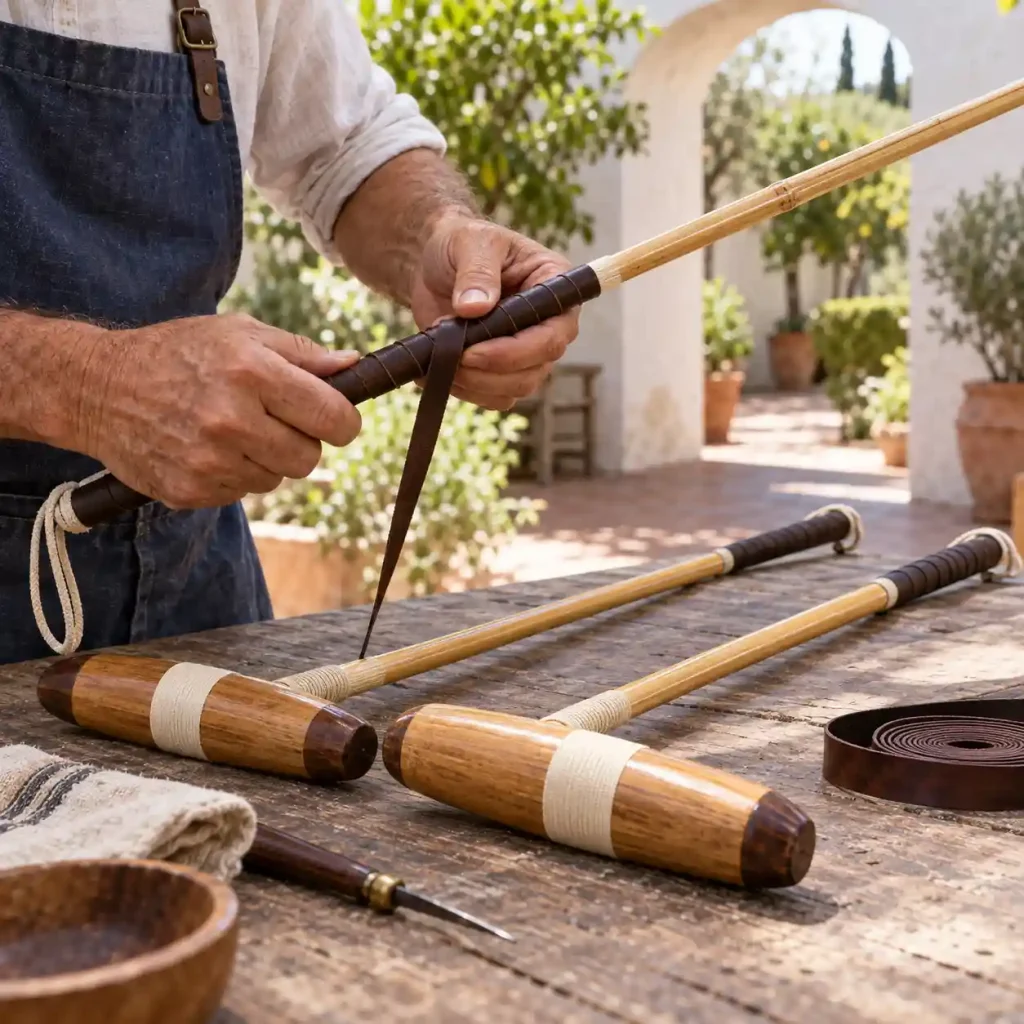
A polo mallet may appear simple, but small differences in length, balance, grip, and shaft response can noticeably affect how it feels during play. The right mallet should help you reach the ball with a natural swing while maintaining a secure seat and controlled position on the horse.
Length is usually the first consideration. A suitable mallet should allow the player to address the ball from the saddle without excessive leaning, reaching, or collapsing through the upper body. However, length should not be selected according to the rider’s height alone. The height and build of the horse, saddle position, rider’s reach, playing experience, and personal swing technique can all influence the best choice.
If possible, test several lengths while mounted and ask an experienced coach to observe your position. A mallet that is too short may encourage overreaching, while one that is unnecessarily long can feel difficult to control. Polo mallets are commonly marked with their length, making it easier to organize equipment for different horses.
The shaft also changes the character of the mallet. Traditional bamboo or cane-style shafts are valued for their responsive feel, but natural shafts can vary slightly in weight and flex. Some players prefer a firmer response, while others are more comfortable with a shaft that provides a little more movement during the swing. The best option is the one that feels predictable rather than excessively stiff, heavy, or flexible.
Consider the balance of the mallet as a complete piece. The relationship between the shaft and head affects how easily the mallet can be accelerated and controlled. The grip should feel secure without forcing the hand to remain tightly clenched. Check that the wrist sling is correctly fitted, firmly attached, and comfortable to use.
Before every practice or match, inspect the shaft for cracks, deep dents, splinters, or unusual bending. Confirm that the head is securely attached and that the grip and sling have not loosened. A visibly damaged mallet should be removed from use rather than temporarily repaired for continued play.
Safe mallet use is also governed by the rules of polo. The United States Polo Association rulebook includes requirements covering legal mallet use, hooking, and actions that could endanger another player or mount. Riders should learn the rules through a recognized club or qualified coach before participating in active play.
After use, wipe the mallet clean and allow it to dry naturally. Do not leave it soaking wet, against a strong heat source, or exposed to prolonged sunlight. Store mallets where the shafts and heads will not be crushed or bent. Regular inspection and proper storage will preserve their condition and help keep their response consistent.