
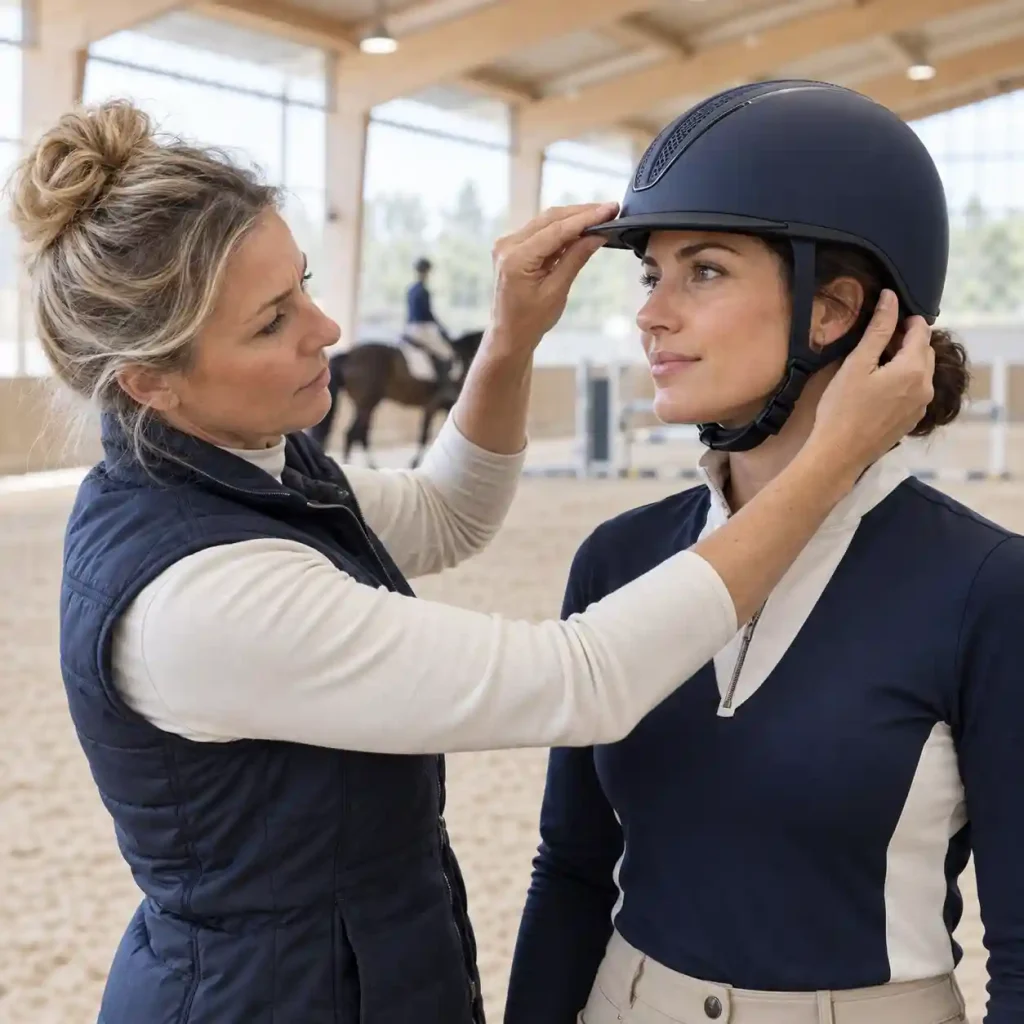
A riding helmet is an essential part of equestrian safety, whether you are learning to ride, schooling at home, playing polo, or competing. Choosing a certified helmet is important, but certification alone is not enough. The helmet must also match the shape of your head and remain securely positioned during normal riding movement.
Begin by measuring around the widest part of your head, keeping the measuring tape level and passing it above the eyebrows and ears. This measurement provides a useful starting size, but it should never replace trying the helmet on. Different brands and models can have noticeably different internal shapes, even when the stated size is the same.
A correctly fitted helmet should sit level on the head rather than tipping backward or dropping forward. The front edge should be positioned close enough to protect the forehead without obstructing your vision. You should feel even, firm contact around the head, with no large gaps and no isolated pressure points that become painful.
With the harness adjusted, move your head gently from side to side and up and down. The helmet should remain stable instead of sliding independently across your hair. It should feel comfortably secure, not painfully tight. The chin strap should lie close enough to help retain the helmet while still allowing normal jaw movement. Hair should be worn in the same way during fitting that it will be worn while riding because changing the hairstyle can alter the fit.
Head shapes vary, so do not assume that going up or down a size will solve every fitting problem. If one model creates pressure at the front, sides, or back, a differently shaped model may be more suitable. The British Horse Society recommends professional helmet fitting and notes that riders may need to try several models to find an appropriate fit.
Always select a helmet carrying a recognized safety standard and quality-assurance mark accepted in your country and riding discipline. In the United States, ASTM F1163 certification with an SEI mark is widely recognized for equestrian helmets. The Safety Equipment Institute provides information about certification and independent testing programs. Competition requirements can change, so check the current rules of your event organizer or governing body before purchasing a competition helmet.
Avoid buying a secondhand helmet because its impact history and internal condition may be unknown. Replace a helmet after a significant fall or impact, even if the outer shell looks undamaged, and follow the manufacturer’s replacement guidance as the helmet ages.
Keep your helmet in a cool, dry place away from prolonged sunlight and extreme heat. Allow it to air-dry naturally after use, and clean it only as directed by the manufacturer. Never place it on a radiator or use harsh cleaning chemicals. Most importantly, remember that no helmet can prevent every injury, but an approved, undamaged, professionally fitted helmet provides a far better level of protection than an unsuitable or poorly fitted one.